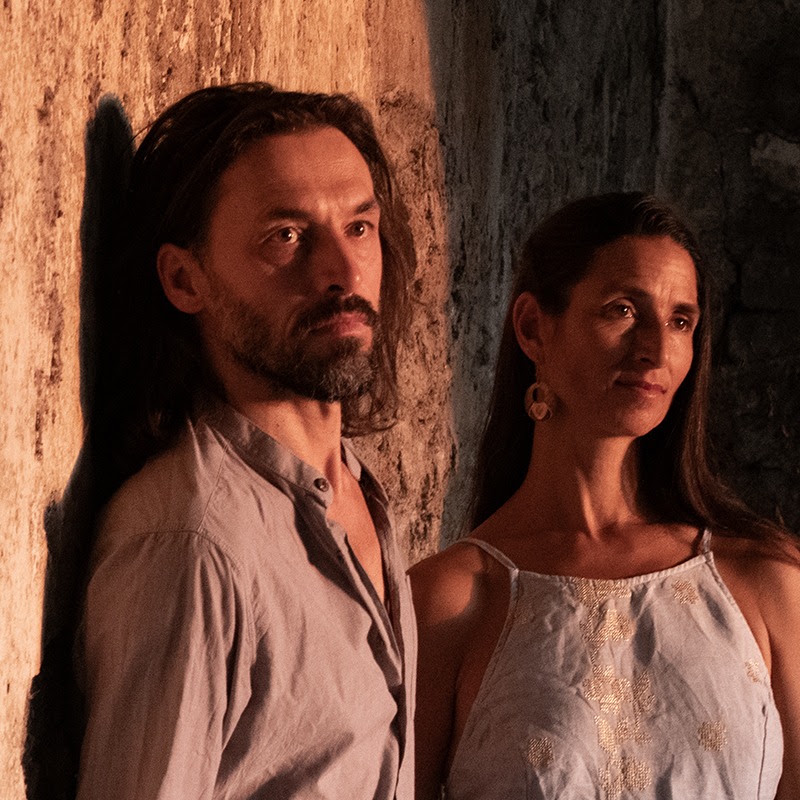
TLDR: Mirabai Ceiba recorded an intimate acoustic performance of the tender song "She" from their 2022 album The Quiet Hour in a cenote cave in Mexico. The five-minute piece features Angelika Baumbach's vocals and guitar, Markus Sieber on guitar, and Bogdan Djukic on violin and percussion, creating a contemplative soundscape shaped by the natural resonance of the underground sacred space.
What is a Cenote and Why Does It Matter for This Performance?
A cenote is a sinkhole or cave system formed in limestone bedrock, found primarily in Mexico's Yucatán Peninsula. These underground cavities have held spiritual and cultural significance for the Maya civilization for thousands of years, serving as sites of ritual, water access, and ceremonial gathering. Recording "She" in a cenote transforms the performance from a studio session into a pilgrimage—the natural acoustics of stone and water create an instrumental effect that no mixing board can fully replicate. The cave itself becomes a third musician, echoing and shaping every note.
The Musical Architecture of 'She'
The composition layers three distinct instrumental voices over Baumbach's vocal line. The acoustic guitar work, handled by both Baumbach and Sieber, provides the harmonic foundation and rhythmic container—accessible, warm, and intimate. The violin, played by Djukic, adds textural complexity and emotional depth, moving between melodic support and atmospheric coloration. Percussion elements woven throughout the arrangement create subtle pulse without dominating the meditative space the song occupies.
This instrumentation reflects a contemporary kirtan aesthetic: rooted in devotional singing traditions but arranged with chamber music sophistication. Unlike full-band productions heavy with rhythm or synth, the stripped-down approach here places emphasis on lyrical content and the emotional resonance of each individual voice.
Who is Mirabai Ceiba and What Does 'The Quiet Hour' Represent?
Mirabai Ceiba is a Berlin-based world music ensemble founded in the 1990s by Angelika Baumbach. The project blends devotional kirtan—Sanskrit chanting and bhakti singing rooted in Hindu and yogic traditions—with elements of world music, creating a contemporary sound accessible to secular and spiritual audiences alike. Their work has earned international recognition for bringing meditative music beyond niche spiritual circles into mainstream listening experiences.
The Quiet Hour, the album from which "She" is drawn, represents a shift toward introspection and restraint. Rather than the lush orchestral arrangements that characterize some of their earlier work, The Quiet Hour favors minimal instrumentation, longer melodic lines, and extended silence—allowing listeners to enter deeper listening states. The album title itself signals the artistic intention: in an age of sonic saturation, silence and quietness are radical choices.
The Significance of 'She' Within the Album's Conceptual Framework
"She" appears to engage with the feminine divine, a central theme in bhakti traditions where the goddess (Devi, Shakti, or the Divine Mother in her many forms) represents creative power, compassion, and the force underlying all manifestation. By titling a tender song simply "She," Baumbach invites listeners to contemplate their own relationship to feminine energy—whether understood theologically, psychologically, or poetically.
The cenote recording location reinforces this thematic resonance. Cenotes have been associated with water deities and feminine creative power in Maya cosmology. Performing a song about "She" in such a space suggests a deliberate alignment between the song's inner meaning and the geographic and spiritual context of its rendering.
How Does the Cenote Cave Acoustically Shape the Performance?
Underground cave environments have unique acoustic properties: natural reverberation that extends decay times, stone surfaces that color frequency response, and the absence of external ambient noise that allows subtle details to emerge. In a cenote, these qualities create an effect of expansiveness within intimacy—the listener is drawn into a small, contained space that feels simultaneously vast through its resonance.
This acoustic environment particularly serves the violin, whose higher frequencies can cut through reverb while also being enriched by it. Baumbach's vocal timbre, likely warm and slightly breathy given the intimate mic placement typical of such sessions, gains additional presence and space through the natural room response. The result is music that feels both immediate and distant, personal and transcendent.
Production and Technical Approach
The project credits reveal a deliberate production philosophy. Filmed and edited by Benjamin Wedemeyer, the visual component likely complements rather than dominates—the cenote setting itself becomes the visual anchor. Audio recording by Fede Diaz and mixing/mastering by Moshik Kop represent professional-level technical execution, ensuring the natural acoustics are captured and preserved rather than artificially enhanced.
The release strategy—offering this first part freely on-demand streaming—suggests an artist commitment to accessibility and audience building. Rather than gatekeeping premium content behind paywalls, Mirabai Ceiba uses this intimate performance as an entry point, trusting that moved listeners will seek out the full album and attend live concerts.
Cenote Sessions as Contemporary Sacred Music Practice
The cenote session format itself has become meaningful in world music and spiritual music contexts. By removing the performance from concert halls or studios and placing it in a naturally resonant sacred site, artists signal that the music is not entertainment-first but practice-oriented. Listeners are invited into pilgrimage, not spectatorship. The raw, intimate quality of the recording—minimal editing, single-take feeling, visible breath—honors the ephemeral, unrepeatable nature of live music while still allowing global audiences access.
Where to Go From Here
If "She" resonates with you, explore the full The Quiet Hour album to understand how this piece sits within Mirabai Ceiba's broader artistic vision. Investigate the cenote as both physical place and metaphor—consider how sacred geography shapes spiritual and artistic practice. For those drawn to kirtan and devotional music, examine the differences between traditionally Sanskrit-language bhakti singing and contemporary English-language devotional music like this, and reflect on how language shapes intention and accessibility. Finally, consider attending one of Mirabai Ceiba's live performances (upcoming dates listed on their website) to experience how intimate acoustic music translates in real-time gathering spaces.


