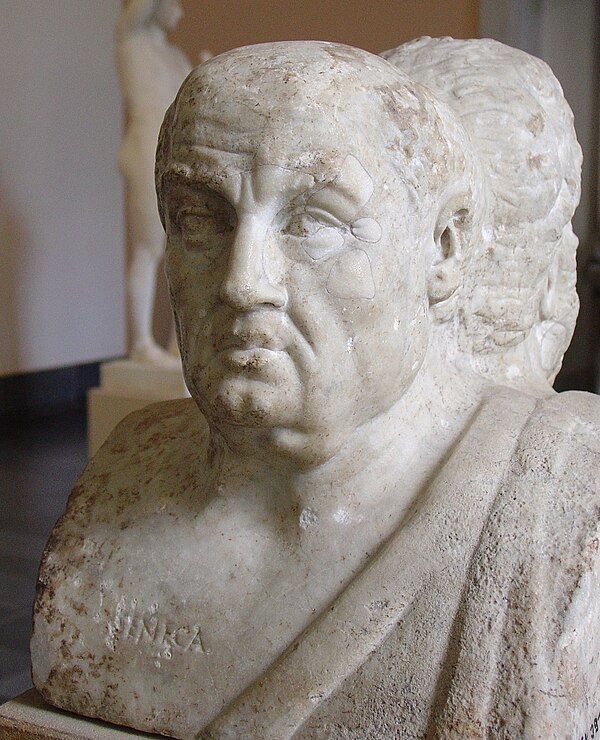
Embracing Freedom in the Face of Necessity
In the words of Seneca, "He escapes necessity, because he wills to do what necessity is about to force upon him." This profound statement invites us to consider the nature of freedom and the power of our will in the face of life's inevitable demands. It suggests that true liberation lies not in the absence of obligation but in the conscious choice to engage with it. By understanding this dynamic, we can navigate our lives with greater intention and agency, transforming what seems like compulsion into a deliberate act of will.
Seneca's insight resonates deeply in a world where many feel trapped by external circumstances. The notion that we can transcend necessity through our own volition challenges the common perception of freedom as merely the absence of constraints. Instead, it posits that freedom is an active engagement with our circumstances, a choice to respond rather than react. This perspective not only empowers us but also invites a deeper exploration of what it means to live authentically in alignment with our values and intentions.
The image / the metaphor
At the heart of Seneca's quote lies a vivid imagery of struggle and liberation. The term "necessity" evokes a sense of inevitability, a force that compels us toward certain actions or decisions. In contrast, the verb "wills" introduces a dynamic of agency and choice, suggesting that while we may be confronted with external pressures, we possess the inner strength to determine our responses. This interplay between necessity and will creates a rich tapestry of human experience, where the tension between external demands and internal desires shapes our journey.
Diving deeper into the metaphor, we can see that Seneca is not merely discussing the act of choosing but rather the transformative power of that choice. To will something is to engage with it fully, to embrace it as part of our path rather than resist it. This act of willing transforms necessity from a burden into an opportunity for growth. It invites us to reflect on how we can shift our perspective on life's challenges, seeing them not as obstacles but as invitations to exercise our freedom and cultivate resilience.
In the speaker's tradition
Seneca's thoughts are firmly rooted in the Stoic tradition, which emphasizes the importance of virtue, reason, and the cultivation of inner peace amidst external chaos. Central to Stoicism is the concept of "apatheia," or the ability to remain undisturbed by external events, allowing us to respond with clarity and intention. This aligns with the idea of "dharma" in Eastern philosophies, where one’s duty is not merely a set of obligations but a path toward self-realization and harmony with the universe. Both traditions highlight the significance of aligning our will with a greater purpose, transcending the limitations imposed by circumstance.
In his "Letters to Lucilius," Seneca often reflects on the nature of human existence and the importance of self-governance. For instance, he writes about the necessity of preparing oneself for the challenges of life, emphasizing that our true power lies in our ability to choose our responses. This echoes the Buddhist concept of "sunyata," or emptiness, which teaches that our perceptions of reality are shaped by our attachments and aversions. By recognizing the fluidity of our circumstances, we can cultivate a sense of freedom that allows us to navigate necessity with grace and purpose.
Living the teaching
Consider a modern scenario where this teaching can be applied: a professional facing an overwhelming workload. The demands of deadlines and expectations may feel like an inescapable necessity, leading to stress and anxiety. However, by consciously choosing how to approach this situation—perhaps by prioritizing tasks, setting boundaries, or seeking support—one can transform the experience from a source of dread into an opportunity for growth and self-discovery. This act of willing to engage with the workload on one's own terms exemplifies the essence of Seneca's teaching.
Another application of this principle can be found in personal relationships. Imagine a moment of conflict with a loved one, where the necessity to address the issue feels daunting. Instead of succumbing to avoidance or resentment, one can choose to engage in open communication, expressing feelings and seeking understanding. This willingness to confront the necessity of the situation not only fosters deeper connection but also empowers both individuals to navigate their relationship with intention and care. In these moments, we realize that our freedom lies in our capacity to choose how we respond to life's challenges.
A reflection
As we contemplate Seneca's profound assertion, we are invited to reflect on our own lives: In what areas do we feel constrained by necessity, and how might we reclaim our freedom through the power of our will? This question encourages us to examine the choices we make daily, urging us to recognize that even in the face of obligation, we possess the agency to shape our responses. By embracing this perspective, we can cultivate a deeper sense of autonomy and purpose, transforming our relationship with necessity into one of empowerment and growth.