The Freedom Found in Courage
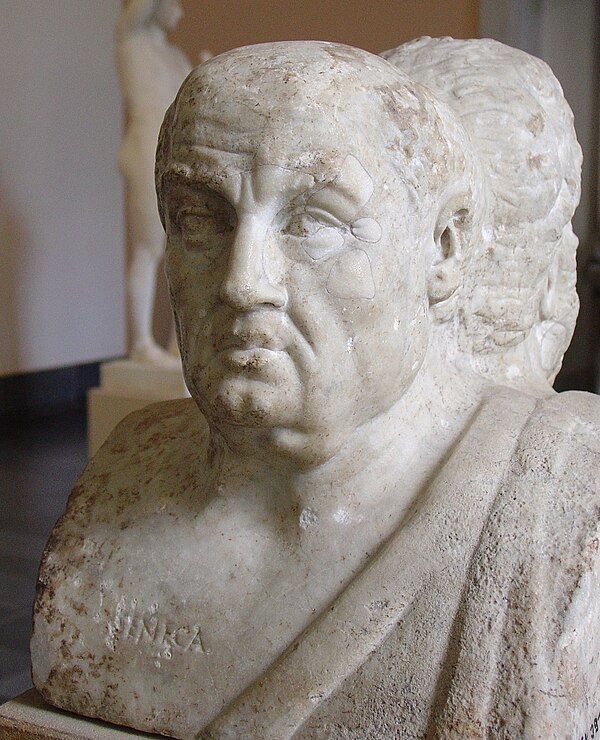
Seneca's assertion, "He who is brave is free," encapsulates a profound truth about the relationship between courage and liberation. In this statement, the Stoic philosopher invites us to consider how the act of bravery can lead to a deeper sense of autonomy and self-determination. The stakes are high: in a world often fraught with fear and uncertainty, understanding the connection between courage and freedom can empower us to navigate life's challenges with resilience and grace.
To delve deeper, we must recognize that bravery is not merely the absence of fear but an active engagement with it. It is the willingness to confront discomfort, to embrace vulnerability, and to stand firm in one's convictions. This understanding of bravery as a pathway to freedom challenges us to reflect on our own lives and the ways in which fear may hold us captive, urging us to seek the courage necessary to break free from those constraints.
The image / the metaphor
At its core, Seneca's quote evokes a vivid image of bravery as a key that unlocks the door to freedom. The verb "is" suggests a direct equivalence between bravery and freedom, implying that one cannot exist without the other. This relationship is not merely theoretical; it resonates deeply within our lived experiences, where acts of courage often lead to transformative moments of liberation. The felt sense of this statement invites us to visualize the courage required to face our fears and the subsequent release that follows.
Diving deeper into the metaphor, we can see that bravery acts as a catalyst for personal growth and self-discovery. When we choose to confront our fears, we often find that the barriers we perceived were largely self-imposed. In this way, bravery becomes a transformative force, allowing us to transcend limitations and embrace a more expansive sense of self. The imagery of breaking chains or stepping into the light serves to reinforce the idea that freedom is not a static state but a dynamic process fueled by courageous action.
In the speaker's tradition
Seneca's insights are firmly rooted in the Stoic tradition, which emphasizes the cultivation of virtue as the highest good. In Stoicism, courage is one of the four cardinal virtues, alongside wisdom, justice, and temperance. This framework aligns closely with concepts found in other spiritual traditions, such as dharma in Hinduism, which speaks to the moral duty to act rightly, or kenosis in Christian thought, which emphasizes the self-emptying love that can lead to true freedom. Each of these concepts underscores the idea that true liberation arises from a commitment to virtue and the courage to uphold it.
In his "Letters," Seneca often reflects on the nature of the self and the importance of inner strength. For instance, in Letter 31, he discusses the necessity of facing adversity with courage, suggesting that it is through such trials that we cultivate our character and achieve true freedom. This notion resonates with the Stoic belief that external circumstances do not dictate our freedom; rather, it is our internal responses to those circumstances that define our experience of liberation.
Living the teaching
Consider a modern scenario where this teaching might resonate: a professional facing a significant career decision, such as whether to pursue a new opportunity that feels daunting. The fear of failure or the unknown can be paralyzing, yet it is precisely in confronting that fear—taking the brave step forward—that one can discover new avenues for growth and fulfillment. By embracing the courage to act, the individual not only opens the door to new possibilities but also cultivates a deeper sense of freedom in their professional life.
Another application of this teaching can be found in personal relationships. Imagine a situation where one must address a long-standing conflict with a loved one. The fear of confrontation may lead to avoidance, perpetuating a cycle of misunderstanding and resentment. However, by choosing to engage with courage, to speak one's truth and listen with an open heart, both parties can experience a profound sense of liberation. In this way, the act of bravery transforms the relationship, fostering deeper connection and understanding.
A reflection
As we contemplate Seneca's assertion, we are invited to ask ourselves: What fears are currently holding me back from experiencing true freedom? This question encourages introspection and invites us to explore the ways in which courage can serve as a transformative force in our lives. By reflecting on our fears and the potential for bravery, we can begin to chart a path toward greater autonomy and fulfillment, embodying the wisdom of Seneca in our daily existence.